What is AI food photography? A plain-English guide
If you run a restaurant, you've probably heard that "AI" can now do your food photos. Depending on who's telling you, it's either magic or a scam. The truth is more useful than either: AI food photography is a real, working technology with a specific job — and clear limits. This guide explains both.
The one-sentence version
AI food photography takes a real photo of your dish — usually from a phone — and uses artificial intelligence to fix what a studio would fix: lighting, background, color, and crop, without changing the food itself.
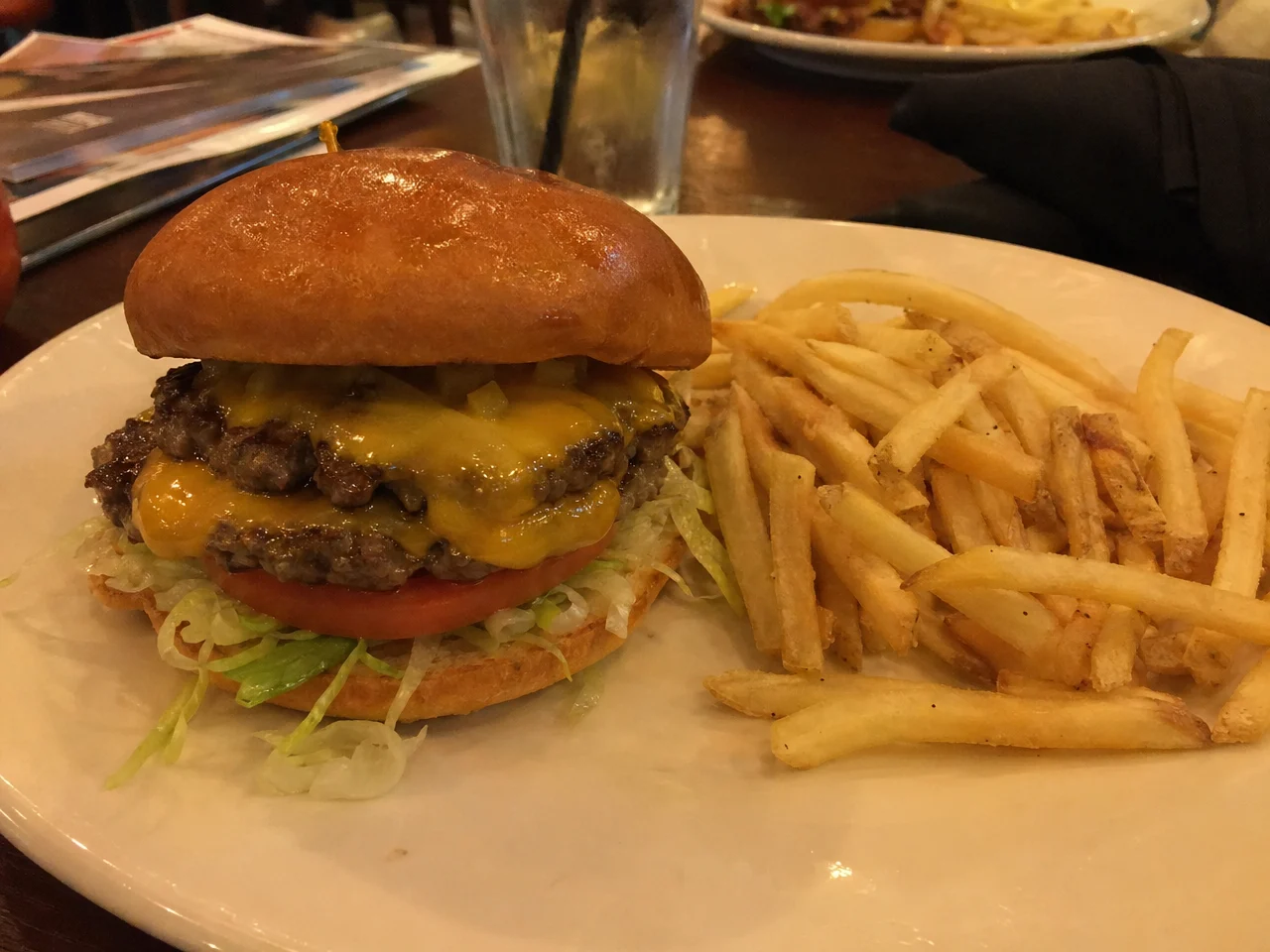
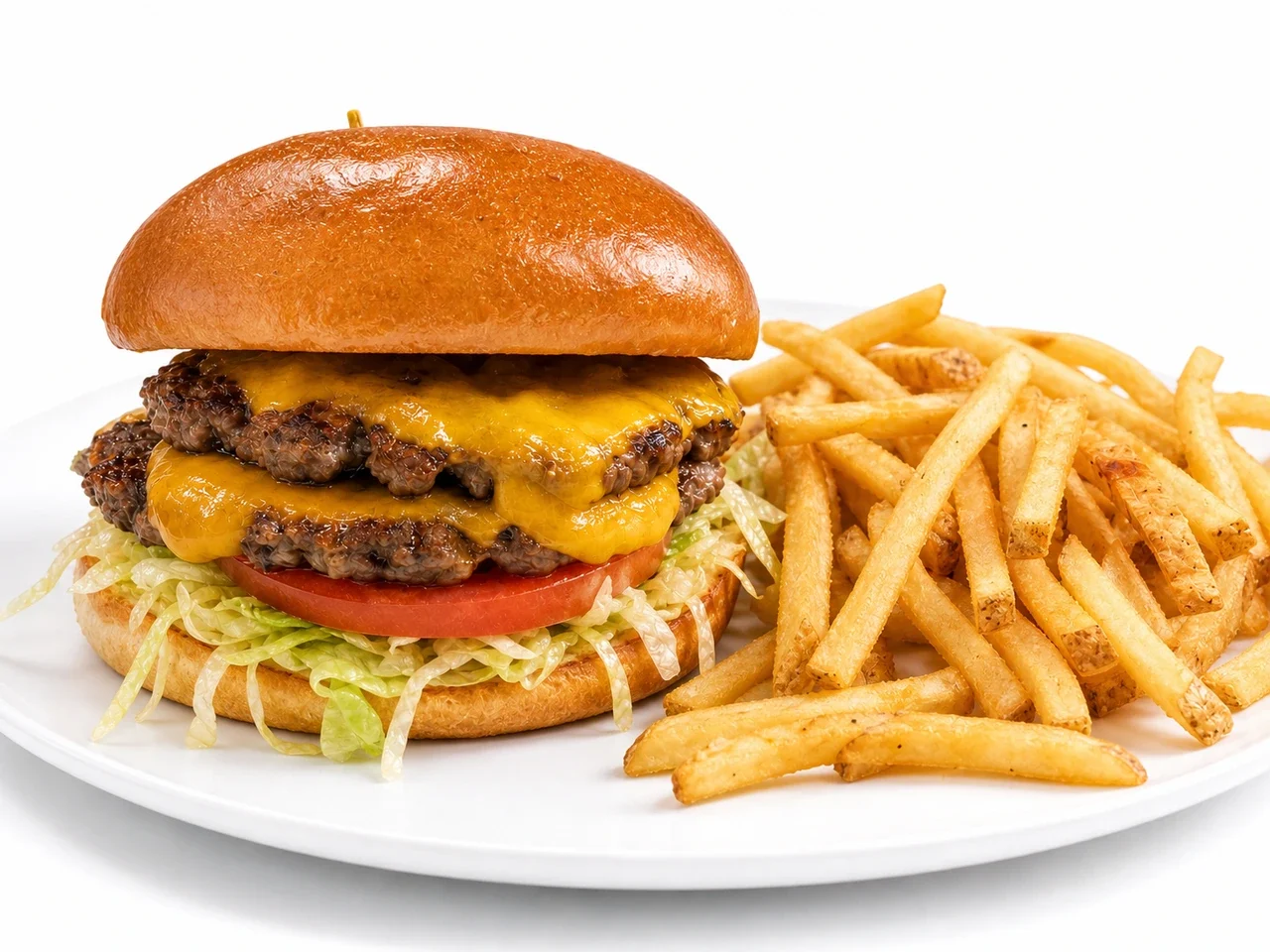
Above: the same burger, before and after AI enhancement. Same bun, same patty, same toppings — different lighting, background, and color treatment.
How it actually works
Modern image AI models can understand what's in a photo — they recognize the plate, the dish, the table, the lighting conditions. Tools built on this technology, like FoodPhoto.ai, use it to re-render the presentation of your photo:
- Relighting. The flat, harsh, or dim light in your snapshot is replaced with directional, soft, studio-style light that gives the food depth and shine.
- Background work. The cluttered prep counter or dim dining room behind your plate is cleaned up or replaced with a styled backdrop — white studio, rustic wood, dark slate, and so on.
- Color correction. White balance gets fixed (no more orange-tinted everything), and the natural colors of the ingredients are recovered.
- Sharpening and detail. Texture in the food — the sear, the crumb, the glaze — is enhanced so it reads even at delivery-app thumbnail size.
- Cropping and export. The result is exported in the exact aspect ratios delivery platforms, social networks, and print menus require.
The whole process runs in the cloud and takes well under a minute per photo. You can see each step in detail on our how it works page.
What it deliberately does NOT do
This is the part that separates serious tools from gimmicks. A trustworthy AI food photography tool is ingredient-faithful: the dish in the output is the dish in your input. It will not:
- Add ingredients or toppings that aren't in your photo
- Make portions look bigger than they are
- Replace your dish with a generic stock-style image of "a burger"
That restraint matters commercially, not just ethically. Delivery platforms penalize listings whose photos don't match the food, and nothing earns a one-star review faster than a dish that looks nothing like its picture.
"Isn't that cheating?"
Here's the context most people are missing: professional food photography has always been staged. Studio shoots use controlled lighting, styling tricks, careful angles, and post-production retouching. Nobody calls a professionally lit photo of your real burger "fake."
Ingredient-faithful AI enhancement applies that same standard — professional presentation of your real food — without the studio. The honesty line isn't "was AI involved?"; it's "does the customer get what the photo promises?" Keep the food truthful and you're on the right side of it.
What it costs
This is where AI changes the equation most. A traditional food photography session is a project — scheduling, shoot time, editing, usage rights — and pricing varies widely by market, but it's typically a matter of hundreds of dollars at minimum, repeated every time your menu changes.
FoodPhoto.ai offers preview generations without a card. Its target paid catalog begins with a $10 Menu Test Pack for 10 credits and $15 monthly for 50 credits; paid purchases reopen after Apple's storefront matches those terms. See the current catalog and availability in our pricing explainer, and compare it to hiring a professional in AI vs hiring a photographer.
When AI food photography makes sense
- Delivery app listings. Hundreds of dish photos needed, thumbnail-sized, white-background preferred — the textbook use case.
- Menu changes and specials. New dish today, photo today. No waiting for the next shoot.
- Social media. A steady stream of consistent, branded food photos without a content budget.
- Multi-location consistency. Every location's photos in the same style, regardless of who took the snapshot.
When it doesn't (yet)
Honest limits: campaign photography with art direction, photos that feature your team or your dining room, and elaborate hero shots built around props and human hands in motion are still photographer territory. AI enhancement works on photos of dishes — that's its lane, and it's very good in it.
The bottom line
AI food photography is best understood as a new price point and turnaround time for something restaurants already needed: presentable photos of real dishes. If your menu photos are currently phone snapshots — or nonexistent — it's the highest-leverage upgrade available for the money.
See it on your own food
Reading only gets you so far. Upload one of your dish photos at FoodPhoto.ai and judge a preview generation yourself without entering a card.
Keep reading: AI vs hiring a photographer · How to take menu photos that sell · Before & after gallery